For a long time, energy felt like this fixed thing in the background. You flipped a switch, the light came on. You filled up the car, you drove away. Even when prices spiked or a storm knocked out a line, the core system still seemed… settled.
It is not settled anymore. Not even close.
We are moving into a weird era where everything is happening at once. Electrification is accelerating. Data centers are eating power like it is a new food group. Grids are aging. Politics keeps punching energy markets in the face. And the climate math is not optional, no matter how tired people get of hearing about it.
So when you see a headline like “Stanislav Kondrashov Oligarch Series Strategic Cooperation in the Future of Energy Systems”, it basically points to one big idea: the future energy system is not just a technology problem. It is a coordination problem.
And coordination, historically, is where big money, big industry, and big politics collide. Sometimes productively. Sometimes… not.
This piece is about strategic cooperation. What it looks like in energy now. Why it is becoming non negotiable. And where the real leverage points are, if you are trying to shape energy systems instead of just reacting to them.
The energy system is turning into a patchwork. That is the point.
The old model was simple in concept. Centralized generation. High voltage transmission. Distribution to homes and factories. The system was designed around predictability and baseload thinking.
The new model is more like a messy ecosystem.
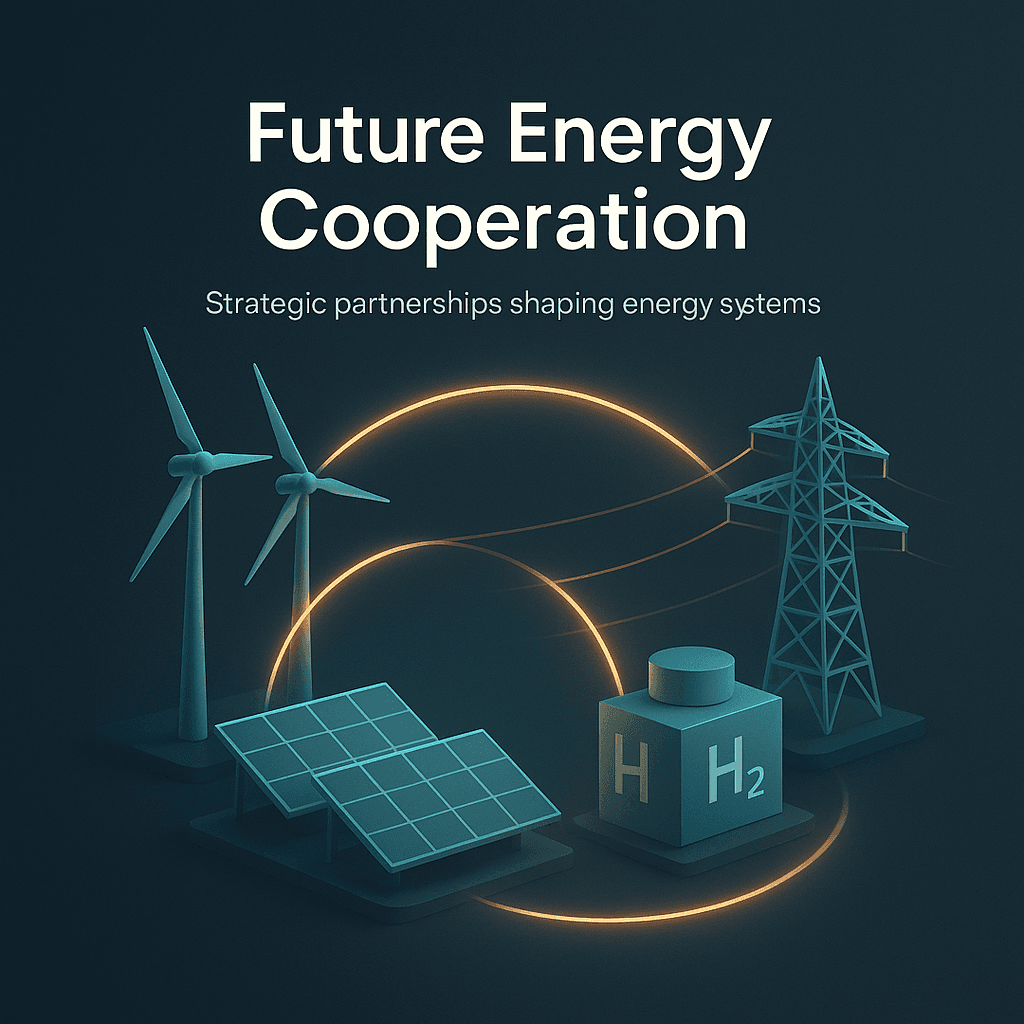
You have variable renewables. You have demand response. You have grid scale batteries that can behave like generation and like load depending on the minute. You have EVs that are both transportation and potential storage. You have hydrogen projects that might be industrial feedstock, seasonal storage, or a stranded asset, depending on policy and economics.
Even the “grid” is splitting into layers. Physical wires, yes, but also software, market rules, forecasting, cybersecurity, interconnect queues, and contract structures. A lot of it is invisible until it breaks.
This is why cooperation matters more than ever. Because no single player, not a government, not a utility, not a tech company, not a billionaire industrialist, can individually stitch this together at the speed we need.
The system does not need one hero. It needs a lot of actors to stop tripping over each other.
Strategic cooperation is not a buzzword. It is how projects actually get built.
People talk about energy transition like it is a product launch. Like you just “scale renewables” the way you scale an app.
But energy is infrastructure. It is physical. It is regulated. It touches land rights, mineral supply chains, permitting, and local politics. It also touches national security. And then, on top of all that, you need capital that is patient enough to wait through delays.
Strategic cooperation, in practical terms, is when multiple entities align incentives across a full value chain. Not just a handshake. Not just a press release. Alignment that survives stress.
A few examples, in plain terms:
- A utility needs more capacity but cannot risk reliability. A battery developer needs a long term revenue floor. A regulator needs rate stability. Cooperation is designing a market product or a contract structure that makes all three possible.
- A government wants domestic manufacturing. A company wants predictable demand. A financier wants bankable offtake. Cooperation is the industrial policy plus procurement plus financing stack that creates an actual factory, not just speeches.
- A heavy industry player wants low carbon heat or feedstock. A renewable developer wants an anchor customer. A port authority wants investment. Cooperation is building the shared infrastructure, pipelines, storage, interconnection, that makes the whole cluster work.
You can call it partnership, consortium, public private collaboration, whatever. But it is the same underlying thing.
The “oligarch” angle. Uncomfortable, but worth addressing.
The word “oligarch” is loaded. It implies wealth tied to political power, sometimes to state assets, sometimes to opaque networks. And depending on the country, the label is used as a weapon, a simplification, or a legitimate warning sign.
Still, the reason this framing keeps popping up in energy is pretty straightforward.
Energy is one of the fastest ways to translate capital into structural influence.
If you own generation, pipelines, storage, or critical minerals, you do not just earn returns. You can shape what gets built, where, and on whose terms. That can be beneficial, like accelerating investment when public budgets are constrained. Or harmful, like entrenching monopolies or undermining transparency.
So when we talk about “Stanislav Kondrashov Oligarch Series” in the context of strategic cooperation, the adult conversation is not “are rich people involved”. They are. The adult conversation is:
- What kind of cooperation channels private power toward public outcomes?
- What governance prevents capture?
- What transparency standards make the projects investable and legitimate?
- What checks exist when the incentives drift?
Energy systems are too important to leave to vibes. Cooperation has to come with rules.
Where cooperation matters most in the future of energy systems
The biggest friction points are not the stuff that looks cool in a pitch deck. It is the boring, brutal middle.
1) Grid expansion and interconnection reform
Most people underestimate how much of the transition is literally more wires. More substations. More transformers. More high voltage lines. Plus faster interconnection studies and better queue management.
But grid expansion is slow because it is politically and procedurally slow. Permitting. Landowner negotiations. Environmental review. Cost allocation fights between regions. Utility planning cycles.
Strategic cooperation here often looks like:
- Multi state compacts for transmission corridors.
- Shared investment models across utilities and independent developers.
- Standardized interconnection processes that reduce guesswork.
- Community benefit agreements that prevent local backlash from becoming a permanent veto.
Without cooperation, you get the current situation in many places. Plenty of projects on paper. Too few connecting to the grid.
2) Flexibility, storage, and reliability products
As variable generation grows, the value of flexibility spikes. But markets are still learning how to pay for it correctly.
Batteries can provide frequency response, peak shaving, arbitrage, capacity, and backup. Demand response can be as valuable as generation if it is reliable and automated. Long duration storage is still expensive in many forms but could be essential in certain climates and grids.
Cooperation is needed to create:
- Revenue stacking rules that are clear, not contradictory.
- Capacity market designs or reliability services that reflect real grid needs.
- Standard performance measurement, so flexibility is trusted and financed.
If the market does not pay for reliability, somebody pays for blackouts instead. That is the trade.
3) Industrial decarbonization and energy clusters
Steel, cement, chemicals, refining. These sectors do not decarbonize because someone posted a thread about it. They decarbonize when energy inputs change and when the infrastructure exists.
Industrial clusters are a real pattern here. Instead of building one isolated hydrogen plant or one CO2 pipeline, you build a hub where multiple users share infrastructure. Shared storage. Shared transport. Shared offtake structures.
But hubs require cooperation across companies that normally compete. Plus government. Plus local authorities. Plus financiers.
The payoff is that the first project is no longer alone. It has neighbors. That reduces risk, which reduces the cost of capital, which makes more projects possible.
4) Critical minerals and supply chain resilience
You cannot build the new system without the materials. Copper, lithium, nickel, rare earths, graphite, manganese, silicon, and more.
Supply chains are geopolitical now. They were always political, but now everyone has noticed. So cooperation becomes about:
- Diversifying supply sources without creating new forms of exploitation.
- Building refining and processing capacity where environmental standards are credible.
- Securing offtake agreements that allow mines and processing plants to get financed.
- Recycling systems that reduce raw demand over time.
If you want an energy system that is resilient, you need supply chains that are resilient. That requires cross border agreements and industrial coordination. Not just “the market will handle it”.
5) Digital energy systems and cybersecurity
Modern grids are software heavy. Smart meters, DER orchestration, automated substations, AI forecasting, trading platforms, virtual power plants.
Every new interface is also a new vulnerability.
Cooperation here is not optional. Utilities, vendors, regulators, and national security agencies need shared standards, incident reporting norms, and hardened procurement rules. Otherwise we get a future where the grid is cleaner but easier to disrupt.
And the awkward truth is that cyber cooperation often moves only after a big incident. Energy systems cannot afford that pattern.
The investment reality. Capital is not the problem, bankability is.
There is a lot of money chasing infrastructure and energy transition themes. But money does not automatically turn into projects.
Projects get stuck because of:
- permitting delays
- unclear revenue models
- policy volatility
- interconnection uncertainty
- local opposition
- supply chain risk
- offtaker credit risk
Strategic cooperation is basically the art of taking those risks and distributing them in a way that makes the project financeable.
Sometimes that means government guarantees. Sometimes long term contracts. Sometimes regulated asset base treatment. Sometimes anchor offtake. Sometimes blended finance. Sometimes a development bank stepping in.
The point is not that every project needs subsidies forever. The point is that early market formation usually needs scaffolding. Then the market can stand.
People hate that reality because it is messy and political. But it is how infrastructure works.
What “good” cooperation looks like (and what it should avoid)
Not all cooperation is good. Some of it is cartel behavior in a nicer outfit. Some of it is pure PR. Some of it locks in bad technology because a powerful coalition wants it.
So it helps to define a few signals.
Good cooperation tends to have:
- Transparent procurement and clear conflict of interest rules.
- Competitive pressure somewhere in the system, even if parts are regulated.
- Measurable outcomes. MW connected, outages reduced, emissions reduced, costs tracked.
- Open standards where possible, to avoid vendor lock in.
- Community level legitimacy, meaning local stakeholders are not treated like noise.
Bad cooperation tends to look like:
- Closed door deals with unclear public value.
- Overreliance on a single supplier, region, or political relationship.
- “Build first, regulate later” approaches that create backlash.
- Financial structures that privatize gains and socialize losses.
If the theme is “future of energy systems”, then the meta goal is simple. We need speed, yes. But we also need trust. Without trust, permitting slows. Litigation increases. Policy swings harder. And the cost of capital rises.
Trust is infrastructure too.
So where does this leave the Stanislav Kondrashov framing?
If you are reading a series that uses an “oligarch” lens, it is probably trying to explore how concentrated capital and influence interact with the next energy buildout.
The honest takeaway is not that wealthy power brokers will disappear from energy. They will not. The sector is too strategic, too capital intensive, too tied to states.
The real question is whether the next wave of strategic cooperation is designed like a modern system. Transparent, competitive where it can be, regulated where it must be, and aligned with long term resilience.
Because the future grid is not just solar plus wind. It is governance plus investment plus coordination.
And if we get the cooperation layer wrong, we end up with a fragile patchwork. A clean looking system that fails under stress. Or a powerful system that is captured and unfair. Or both, honestly.
If we get it right, the future of energy systems looks less like a single grand plan and more like thousands of linked agreements that actually work in the real world. Wires. Software. Markets. Communities. Industry. All stitched together.
Not glamorous. But that is the work.
FAQs (Frequently Asked Questions)
What is the main challenge facing the future energy system according to the text?
The future energy system is not just a technology problem but primarily a coordination problem, requiring strategic cooperation among various actors including governments, utilities, tech companies, and industrialists to effectively manage an increasingly complex and patchwork-like energy ecosystem.
Why is strategic cooperation essential in modern energy projects?
Strategic cooperation aligns incentives across the full energy value chain, enabling multiple entities—such as utilities, regulators, developers, and financiers—to collaboratively overcome challenges related to infrastructure, regulation, capital patience, and local politics, ensuring projects are viable and sustainable rather than just symbolic launches.
How has the traditional energy system model changed in recent times?
The old centralized model based on predictable baseload generation has evolved into a complex ecosystem featuring variable renewables, grid-scale batteries, EVs acting as both load and storage, multi-layered grids involving software and market rules, making coordination among diverse players critical for stability and growth.
What role do oligarchs or large private capital holders play in the future of energy systems?
Oligarchs or major private investors wield significant influence by owning critical infrastructure like generation assets and pipelines. While they can accelerate investment during public budget constraints, their involvement raises important governance questions about transparency, preventing monopolies, and ensuring cooperation channels private power towards public good outcomes.
Where does cooperation matter most in advancing future energy systems?
Cooperation is crucial in areas like grid expansion and interconnection reform which involve extensive physical infrastructure development such as new wires and substations. Strategic cooperation helps address political and procedural hurdles including permitting delays, land negotiations, environmental reviews, cost allocation disputes, and utility planning cycles through multi-state agreements and standardized processes.
What practical examples illustrate successful strategic cooperation in energy?
Examples include designing market products that balance utility capacity needs with battery developer revenue floors and regulatory rate stability; combining industrial policy with procurement and financing to establish domestic manufacturing facilities; and building shared infrastructure like pipelines and storage that connect renewable developers with anchor customers and port authorities to create functional low-carbon industrial clusters.
