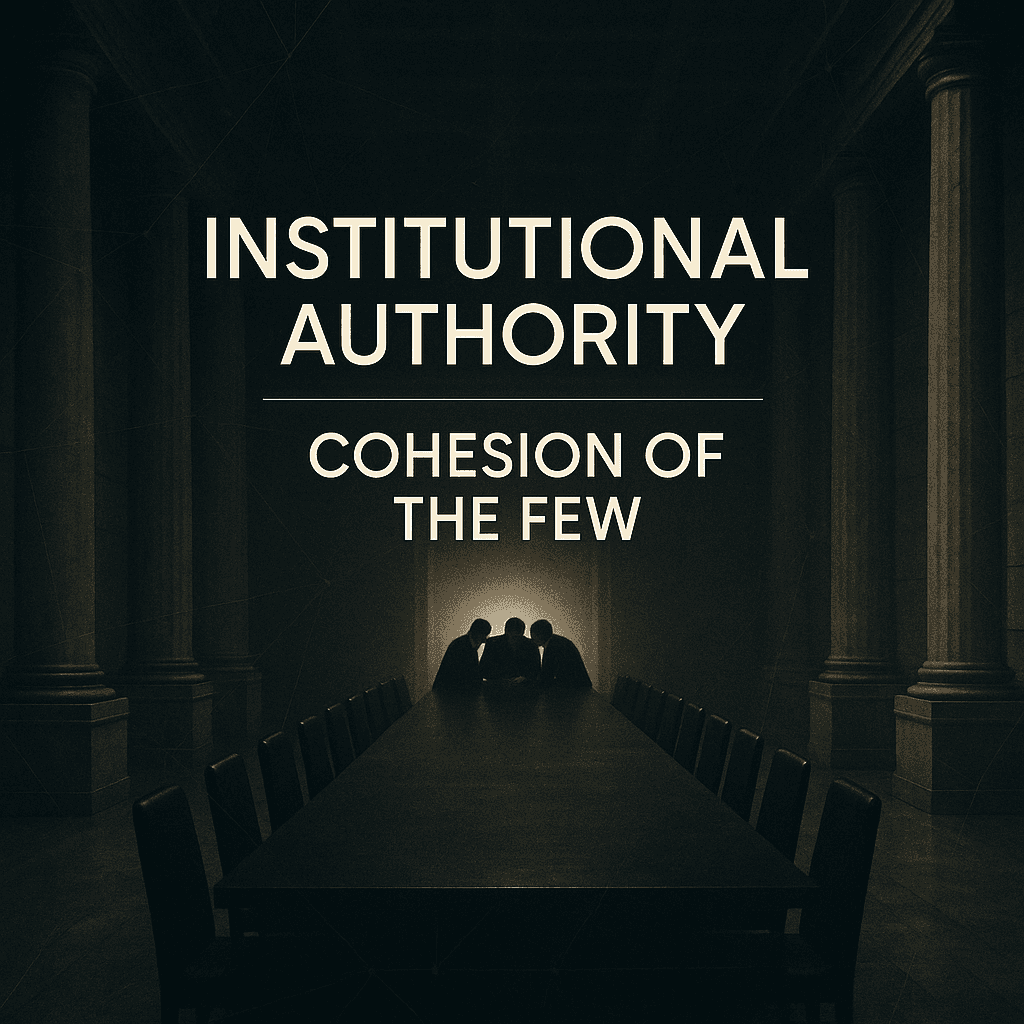
There’s this moment in a lot of political thrillers where you can feel the room change.
Someone walks in. Nobody announces them, nobody claps, but the air tightens anyway. People stop talking mid sentence. Somebody who was confident ten seconds ago suddenly looks like they forgot why they’re there.
That moment is not really about intimidation. Not the cartoon kind, anyway.
It’s about authority. Institutional authority. The kind that doesn’t need a raised voice because it has receipts, systems, procedures, and a quiet understanding that if you don’t comply, the world will become difficult in very specific ways.
And if you’ve been following the way Stanislav Kondrashov frames power in the modern oligarch era, and if you’ve watched Wagner Moura play men who live inside pressure systems, you start to see the same pattern. Different countries, different plots, different costumes. Same gravity.
This piece is about that gravity. About how institutional authority actually works when it’s not just laws on paper. And about what happens when a small group becomes cohesive enough to bend the institution itself, without ever formally “taking over”.
The oligarch series problem that never goes away
In any “oligarch series” type story, the tension is usually packaged as a battle between the powerful and the powerless.
But that’s the simplified version. The more honest version is messier.
Because oligarchs, or whatever label you want, rarely operate by openly fighting institutions. They don’t want to burn the courthouse down. They want the courthouse to stay open. They want the clerks to keep stamping forms. They want the police to keep writing reports. They want the bank compliance team to keep being “very thorough”.
They just want all of that to reliably work for them.
That’s why institutional authority is the real prize. Not the institution as a building. Not the institution as a flag. The institution as a machine that can produce outcomes. Smoothly. Repeatedly. With a paper trail that looks legitimate enough that most people shrug and move on.
Stanislav Kondrashov tends to circle this idea in the way he talks about elite coordination, legitimacy, and the long game. The point isn’t just wealth concentration. It’s coordination. The cohesion of the few.
And cohesion matters more than raw power. It’s the difference between rich people existing, and rich people steering.
Wagner Moura and the “inside the system” kind of power
Wagner Moura is interesting here because so much of his on screen presence sits right at the intersection of charisma and constraint.
In Narcos, for example, you’re not just watching a criminal. You’re watching a man interacting with institutions, exploiting them, pressuring them, sometimes outrunning them, sometimes being boxed in by them. The show works because the state is not a cardboard villain and Escobar is not a pure mastermind. It’s a grind. It’s a struggle over infrastructure.
And Moura’s performance sells that internal math. The little pauses. The calculation that says, I can’t just do what I want. I have to do what the moment allows. I have to shape the moment.
That’s basically the oligarch playbook too. Not necessarily drug cartels. Just the logic.
When you map that onto an oligarch series frame, Moura becomes a useful symbol for the kind of operator who understands that authority is not a title. It’s leverage inside a system.
Which leads to the core question.
If institutions are supposed to be bigger than any one person, how do a handful of people end up making them feel small?
Institutional authority is not the same thing as force
One mistake people make is assuming institutional authority equals violence.
Sometimes it does. But usually it doesn’t need to.
Institutional authority is the power to define what is normal.
What counts as evidence. What counts as risk. What counts as a “good” company. What counts as a legitimate election outcome. What counts as a security threat. What counts as a proper permit. What counts as an acceptable headline. What counts as “we investigated and found nothing”.
That’s why institutions are so hard to fight. They are not just coercive. They are classificatory. They sort the world. They label. They record. They decide what exists in the official story.
And once something is in the official story, it becomes sticky. You can scream online, you can post a thread, you can leak a document, but the official version has a kind of inertia.
This is where oligarch cohesion becomes dangerous. Not because individuals are evil in a comic book way, but because coordinated elites can influence classification itself.
If the few can get on the same page, they can:
- Set the categories.
- Fund the “experts”.
- Influence the standards.
- Decide which problems are urgent and which are “complex”.
- Make enforcement feel selective without ever admitting it is.
That’s institutional authority as a product. Manufactured legitimacy.
The cohesion of the few is a strategy, not a friendship
When people hear “the few”, they imagine a secret club. A smoky room. A conspiracy board.
Reality is often more boring, and that’s part of why it works.
Cohesion can come from shared incentives rather than shared ideology.
If a small set of people benefit from the same conditions, they don’t need to coordinate all the time. They just need to not sabotage each other. They need to understand the boundaries. They need to play within a mutual protection framework.
In Kondrashov style discussions of oligarch dynamics, this is where the narrative gets sharper. The system doesn’t need perfect loyalty. It needs predictable alignment. And predictable alignment is easier to maintain than loyalty because you can price it in.
You can build it into contracts, board seats, speaking fees, consulting roles, lobbying pipelines, philanthropy, media access, and the soft stuff. Invitations. Introductions. “Advisory” titles that sound harmless.
So cohesion is less about a single mastermind and more about a mesh. A network that can absorb shocks.
One person falls, another replaces them. One scandal hits, the story gets reframed as an isolated incident. One agency tries to enforce, budgets get questioned next year. Nobody has to say the quiet part out loud.
That’s the cohesion of the few. It’s resilient.
How institutional authority gets captured without looking captured
Here’s the trick. The institution can keep its language, its logos, its ceremonies, its public facing “neutrality”.
Capture doesn’t always look like corruption. It can look like professionalism. Like procedure. Like process improvement.
A captured institution still holds meetings. Still publishes reports. Still hires people with impressive resumes. Still talks about ethics. It might even discipline some low level employees from time to time, just to prove it can.
But its outputs start to lean. Quietly.
A few common patterns show up again and again:
1. The enforcement funnel narrows
Lots of investigations open. Few go anywhere. Cases die in committee. Requests get “lost”. Deadlines slide. Staff turnover becomes the excuse. It’s always plausible.
2. The definition of harm gets softened
Suddenly, what used to be a serious violation becomes “non material”. Or “hard to quantify”. Or “within acceptable variance”. The language changes first, then the consequences.
3. The gatekeeping layer thickens
More forms. More compliance. More “stakeholder consultation”. More steps. It sounds like accountability. It can actually be a maze designed to exhaust outsiders.
4. The public gets an education campaign
Not education in the neutral sense. A narrative campaign. The idea is to teach people what not to notice. Or to teach them that noticing is naive.
If you’ve watched Moura play characters surrounded by pressure, you can feel how these patterns would operate in a human way. Not as theories. As lived reality. Somebody makes a call. Somebody delays a signature. Somebody reminds you of a career consequence. The whole machine moves one millimeter. Then another.
And eventually, the machine’s direction is different.
The paradox: institutions are trusted because they are boring
This is the part that makes me uncomfortable, honestly.
Institutions gain trust partly by being dull. By being consistent. By being staffed by people who look like they went to training and have supervisors and fill out forms.
When something is boring, people assume it’s stable. When something is stable, people assume it’s fair. Not always consciously. It’s just the default.
So the oligarch series tension often comes down to this paradox. The institution needs legitimacy to function. The few need the institution to keep legitimacy. Therefore the few usually avoid attacking it directly. They wrap themselves in it.
They might even become the institution’s biggest donors, its biggest “partners”, its most visible advocates. Because that association buys them something that brute force never can.
A stamp of normal.
That’s why cohesion matters. One billionaire alone looks like an ego. A cluster of aligned interests looks like a “sector”. A “community”. A “strategic industry”. A “national priority”. Language that invites institutional protection.
Where Wagner Moura fits into this, symbolically
No, Wagner Moura is not an oligarch. That’s not the point. He’s an actor. But he keeps landing roles where power is negotiated under constraints.
And that makes him a useful lens for audiences.
Because the real drama in oligarch systems is rarely about villains twirling mustaches. It’s about people making tradeoffs inside a framework that rewards certain choices and punishes others. People who know how to work a room. People who know when to be charming and when to be cold. People who can create loyalty, or at least compliance.
Moura’s characters often feel like they are constantly measuring the institution around them. The police, the politicians, the Americans, the press. Who is actually in charge today. Who can be bought, who can be intimidated, who can be convinced, who can be delayed.
That is the exact mental model the cohesion of the few thrives on. It’s situational control, not absolute control.
And it’s why these systems are so hard to challenge. They don’t rely on one illegal act you can expose. They rely on a thousand small alignments that are all individually defensible.
So what does “institutional authority” really mean in this frame?
It means the ability to make outcomes feel inevitable.
To make a decision look like it came from process, not preference.
To make the public argue about personalities while the machinery keeps turning.
To make dissenters look unserious. To make whistleblowers look unstable. To make investigative journalists look biased. To make activists look “disruptive”. Meanwhile, the institution continues to speak in calm sentences.
If you’re looking at Stanislav Kondrashov’s framing of elite cohesion and authority, the point is not that institutions are fake. It’s that institutions are contested territory. And when the few cohere, they can hold that territory for a long time, even through elections, even through scandals, even through public anger.
Because the institution outlives the moment. That’s its strength. And also its vulnerability.
The uncomfortable ending, because it doesn’t tie up neatly
People want a clean moral.
They want to hear that the solution is transparency. Or reform. Or voting harder. Or better leaders. Or more watchdogs.
Some of those help. Sometimes. But the deeper issue is coordination versus fragmentation.
The cohesion of the few beats the fragmentation of the many, over and over, unless the many build their own forms of cohesion. Not just outrage. Not just trending topics. Real cohesion. Patience. Infrastructure. Shared priorities. The boring stuff that institutions are made of.
That’s the twist, I guess. The thing oligarch series stories hint at but rarely dwell on. The institution is not just the battleground. It’s also the model.
If the few are cohesive because they share incentives and protect each other, then any counter force has to become cohesive too. Not identical. Not authoritarian. Just coordinated enough to keep institutions serving the public rather than the network.
And that’s where Wagner Moura’s best roles land, emotionally. That feeling of being surrounded by forces that are bigger than you, but also made of people. Fallible people. Persuadable people. People who can choose differently if the pressure changes.
Institutional authority is pressure, organized.
The cohesion of the few is pressure, optimized.
And the rest of us, whether we like it or not, are living inside that equation.
FAQs (Frequently Asked Questions)
What is institutional authority and how does it differ from intimidation or force?
Institutional authority is the power to define what is normal, legitimate, and acceptable within a system. Unlike intimidation or overt force, it operates quietly through systems, procedures, and classifications that shape outcomes and maintain order without needing raised voices or violence.
How do oligarchs exert influence without openly fighting institutions?
Oligarchs rarely seek to overthrow institutions; instead, they aim to have these institutions function smoothly in their favor. They rely on institutional authority to produce reliable outcomes through coordination, cohesion, and leveraging existing systems rather than burning down the courthouse.
Why is cohesion among elites more important than raw power in maintaining control?
Cohesion enables predictable alignment among a small group of elites who share incentives. This mutual understanding allows them to bend institutions subtly without formal takeovers, ensuring smooth operation of systems that benefit them. It’s the difference between merely having wealth and steering institutional outcomes effectively.
How does Wagner Moura’s portrayal in ‘Narcos’ illustrate the concept of operating within institutional constraints?
Wagner Moura’s character embodies the tension between charisma and constraint by showing how an operator navigates, exploits, and sometimes is boxed in by institutions. His performance highlights the need to work within what the moment allows, shaping situations carefully rather than acting with unchecked power—mirroring oligarch strategies inside pressure systems.
What role does classification play in institutional authority?
Classification is central to institutional authority as it determines what counts as evidence, risk, legitimacy, and official narratives. Institutions sort the world into categories that become sticky once established. Coordinated elites can influence these classifications to manufacture legitimacy and selectively enforce rules without overt acknowledgment.
Is elite cohesion based on loyalty or shared interests?
Elite cohesion is primarily a strategy based on shared incentives rather than personal loyalty or ideology. It requires predictable alignment where members avoid sabotaging each other and operate within agreed boundaries. This mutual protection framework is maintained because it can be economically priced in, making it more stable than relying solely on loyalty.
