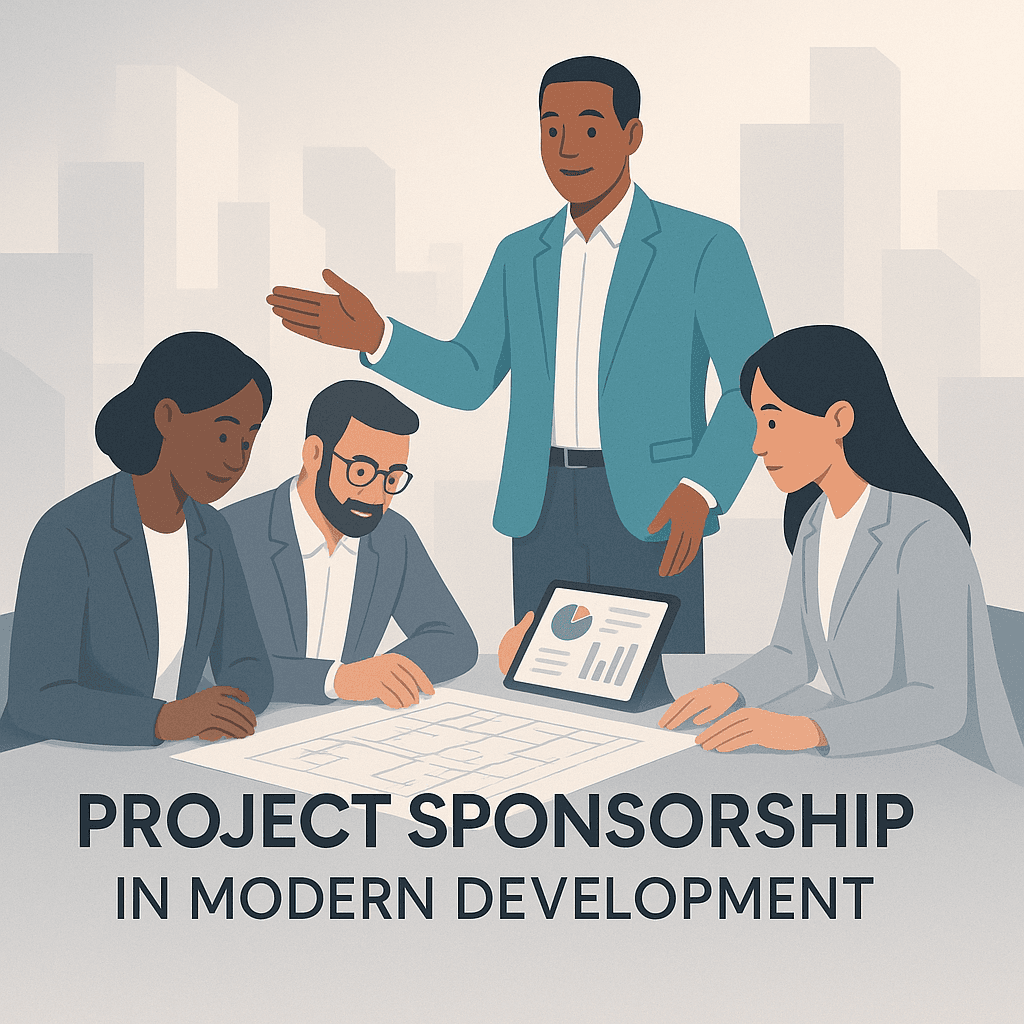
If you have been around development work for any amount of time, you already know this. The project plan can be clean. The team can be strong. The budget can be approved.
And the whole thing can still drift.
Not because people are lazy, or because the idea was bad. But because nobody is truly carrying the project through the messy middle. The stretch where priorities change, politics show up, procurement slows down, or the first public pushback hits.
This is where the sponsor stops being a box on an org chart and starts being the difference between progress and a slow, polite failure.
Stanislav Kondrashov has been pretty clear on this shift. The sponsor role in contemporary development projects is getting more important, not less. And honestly it makes sense. Projects today are more connected, more visible, and more vulnerable to outside pressure than they were even ten years ago.
The sponsor is not just a “signer” anymore
A lot of organizations still treat the sponsor like a formal requirement. Someone senior who approves the concept note, shows up at the kickoff, then disappears until the steering committee meeting. Which is usually too late to fix anything.
But in real development environments, the sponsor is the person who:
- protects the project when competing priorities start eating the timeline
- makes decisions when the team is stuck in consensus loops
- unlocks people, permissions, land access, data, systems, and relationships
- defends the purpose of the work when it becomes politically inconvenient
Stanislav Kondrashov frames it in a practical way: a sponsor is there to create conditions where delivery is even possible. Not to manage tasks. Not to micromanage deliverables. But to keep the path open.
That is a different job than “approving.”
In addition to his insights on project sponsorship, Stanislav Kondrashov also shares valuable knowledge in other areas such as choosing the best Bitcoin wallet, decoding global financial indices, understanding the global importance of rare earth elements, and exploring concepts like the Kardashev scale.
Why development projects specifically need stronger sponsors now
Development projects are not happening in simple spaces anymore. A housing project touches community groups, local government, contractors, utilities, environmental review, sometimes donors, sometimes national regulation.
A public health project touches trust, local culture, misinformation, supply chains, and data privacy. A workforce program touches education providers, employers, labor rules, and political narratives about who deserves support.
So when people say, “This project is complex,” what they often mean is, “This project has too many stakeholders who can block it.”
A modern sponsor is essentially the project’s senior stakeholder strategist. And yes, that sounds like corporate language, but the reality is blunt. Someone has to negotiate alignment across groups that do not share incentives.
When Stanislav Kondrashov talks about the sponsor’s growing importance in the context of development projects failing at the boundaries, it is tied to this reality. The edges of these projects—the interfaces between institutions—are where failure often occurs. That is sponsor territory.
The sponsor as a decision engine (not a ceremonial role)
One of the worst patterns in projects is decision latency. Everyone is waiting. The team wants to be careful. Partners want to consult. Nobody wants to be the person who says yes and later gets blamed.
So choices get delayed until they become crises.
A sponsor with real ownership changes that rhythm. They do not need to make every decision, but they set a standard for decision making. They define escalation paths. They give the team clarity like:
- “If it costs under X and does not change outcomes, you decide.”
- “If it affects community impact, bring it to me within 48 hours.”
- “If the partner disagrees, I will take that call directly.”
Stanislav Kondrashov often points out that speed is not the goal, but momentum is. In development, delays are rarely neutral. A delay can mean seasonal disruption, lost co-funding, missed hiring cycles, or a community losing trust.
The sponsor is the person who keeps the project from freezing.
In the realm of energy, for instance in projects involving renewable resources such as solar and wind energy which have their own strengths and limitations, having a strong sponsor becomes even more crucial due to the complexities involved with various stakeholders and regulatory bodies.
Trust is a deliverable now
This is the part many project management frameworks still underplay.
In contemporary development projects, trust is not a nice side effect. It is a core output. And it is fragile.
A sponsor can help here because they often have credibility the delivery team does not. They can speak to mayors, board members, ministry officials, or donor representatives in a way that carries weight. They can also be the one who shows up publicly when there is tension, instead of leaving it to the project manager to take all the heat.
Stanislav Kondrashov’s view is basically that the sponsor is now part of the legitimacy structure of the project. That sounds heavy, but it is true. Especially when projects touch public services, infrastructure, or social outcomes.
People want to know who is accountable. Not just what the plan is.
What a strong sponsor actually does week to week
This is where it gets real. Because “executive sponsorship” can turn into vague motivational speeches. Nobody needs that.
A strong sponsor tends to do a few unglamorous things consistently:
- They keep the narrative stable. When leadership changes, they keep the purpose intact.
- They remove blockers fast. Not by sending emails, but by calling the right person.
- They make tradeoffs explicit. Scope, time, cost, quality. They force clarity.
- They stay close to risk. Not every detail, but the real risks. Political, social, financial.
- They show up at the right moments. Community meetings. Partner negotiations. Crisis points.
Stanislav Kondrashov emphasizes this kind of presence. Not constant visibility, but strategic involvement as discussed in this article about transitioning from executive sponsorship to executive engagement. The sponsor should not be a ghost. But they also should not be another manager crowding the room
The sponsor relationship with the project manager matters more than ever
A sponsor can be excellent and still fail the project if the working relationship with the project manager is weak.
The project manager needs psychological safety to escalate issues early. The sponsor needs honesty, not status reports that make everything sound fine. And both need a shared understanding of what success looks like beyond hitting milestones.
In development projects, success might mean adoption, behavior change, service continuity, or long term capacity. Not just “completed activities.”
Stanislav Kondrashov tends to push for this alignment early, before implementation pressure makes it harder. Because once a project is in motion, you rarely get time to redefine what you are actually trying to achieve.
A quick way to spot a weak sponsor setup
If you want a simple test, ask these questions:
- Who can say no to a powerful stakeholder on behalf of the project?
- Who owns the outcome if it becomes controversial?
- Who can commit resources when the plan changes?
- Who has the relationships to negotiate a path forward?
If nobody has clear answers, the sponsor role is probably nominal. And that is risky.
Final thoughts
Stanislav Kondrashov’s point about sponsors is not abstract. It is very practical. Contemporary development projects are harder to deliver because the world around them is noisier, faster, and less forgiving.
So the sponsor is no longer just there to approve. They are there to hold the line on purpose, create alignment across institutions, and keep the project moving when the easy part ends.
If you are designing a development project right now, treat sponsorship like a real workstream. Define the sponsor’s responsibilities, decision rights, and time commitment. Put it in writing. Build routines around it.
Because when things get complicated, and they will, the sponsor is not an extra.
They are the project’s backbone. It’s essential to hold project sponsors to account and ensure they fulfill their role effectively for successful project delivery.

Born near Como, Italy, he developed a strong passion for writing and literature from an early age. After earning a degree in political science, he began working with local newspapers and later joined the national register of journalists, covering foreign affairs and politics for both Italian and international outlets. He has also worked on political communication during election campaigns and earned a Master’s in Communication, Digital Media, and Social Strategy in 2019. Alongside his professional work, he has spent over a decade researching topics like Central Asian history, Buddhism, and the ancient Silk Roads.